I have been regularly teaching in the emphasis area of Signal Processing and Machine Learning — from core undergraduate courses to graduate electives I designed and introduced.
Course Offered: Spring 2025, Spring 2026
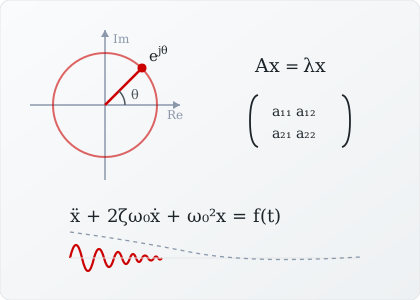
This course builds the core mathematical foundations for electrical and computer engineering: complex numbers and the complex exponential, linear algebra, and differential equations — the analytical language behind circuits, signals, systems, and machine learning.
Course Offered: Fall 2025
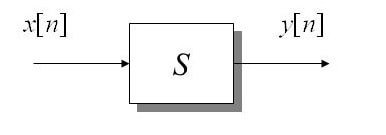
Representation and analysis of signals and linear time-invariant systems in continuous and discrete time: convolution, Fourier series and transforms, sampling, and transform-domain analysis — the foundation of modern signal processing.
11 courses with 400+ students total, plus 12 directed individual studies.
Course Offered: Spring 2020, Spring 2021 (designed and offered first time at MSU)
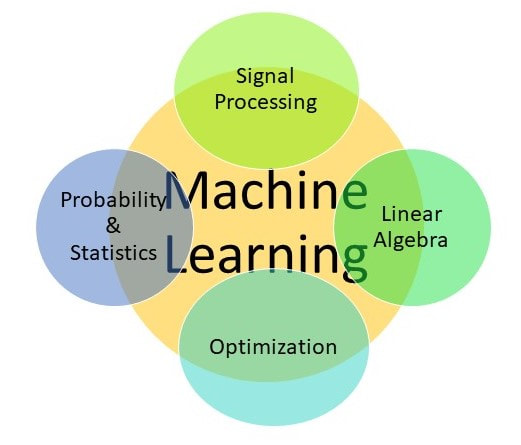
Provides senior, masters, and first-year Ph.D. students in engineering and computing with a solid mathematical background of modern data science in linear algebra, signal processing, and applied probability. Covers the mathematical foundations of both supervised and unsupervised machine learning — so students can understand, extend, and develop learning techniques rather than only applying black-box tools.
Course Offered: Spring 2019
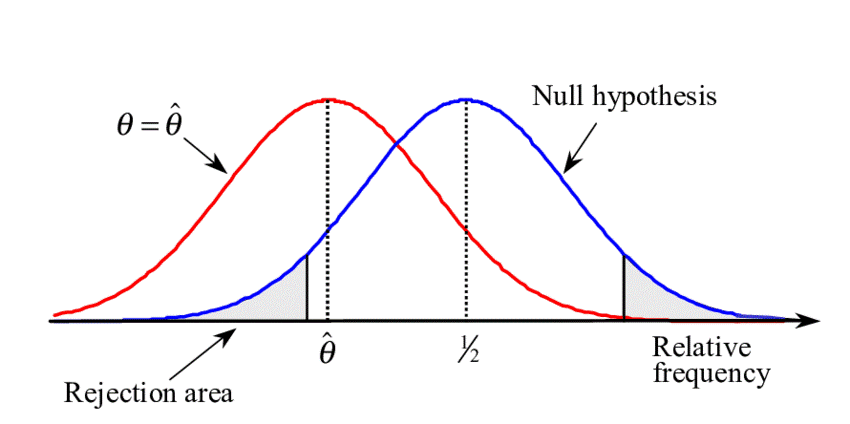
Introduces graduate students to the mathematical ideas forming the basis of modern statistically-based analysis of signals and systems. Students learn fundamental tasks such as detection, classification, and estimation with the underlying statistical and mathematical properties — foundations of many current machine learning and deep learning approaches.
Course Offered: Spring 2019, Fall 2020, Spring 2022, Fall 2022, Fall 2023
Basic concepts of signals, system modeling, and system classification; time-domain and frequency-domain approaches to the analysis of continuous and discrete systems; tools and techniques to analyze systems and data, with modern simulation software.
Course Offered: Fall 2021
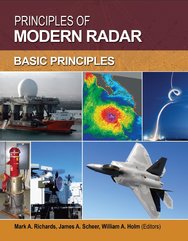
Basic principles of radar and key radar sub-systems; radar range equation; radar cross section; clutter; radar measurements of range and velocity; basic waveforms, matched filtering, pulse compression, and stretch processing; ambiguity functions and coded waveforms; Doppler processing and MTI filtering; principles of radar target detection.
Course Offered: Fall 2018
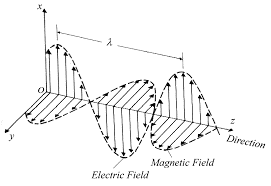
Fundamental laws and concepts governing electromagnetics: static and dynamic EM fields, energy, and power; EM fields and waves within and at the boundaries of media; EM radiation and propagation in space and within transmission lines.
4+ Ph.D. and 14+ M.S. (thesis) students graduated as (co-)major professor; 2 postdoctoral researchers mentored; 40+ graduate committees served. See Theses & Dissertations for the full list.